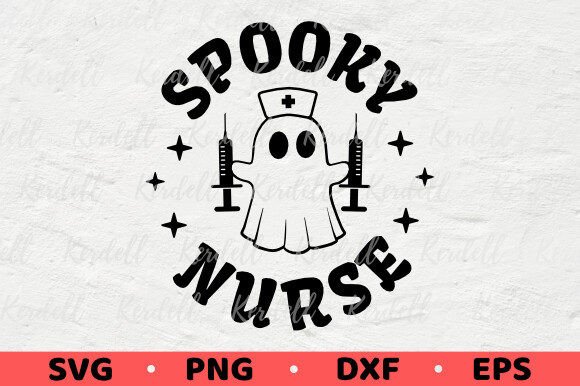
Spooky Nurse: Halloween Charm, Not Just a Ghost
As someone who’s stitched hundreds of holiday designs—from subtle nursery motifs to bold festival tees—I opened Spooky Nurse, Halloween Nurse, Boo Ghost expecting whimsy. What I found was something sharper: a tight, expressive illustration that balances playful spookiness with real-world embroidery viability. It’s not just a ghost in scrubs—it’s a design that *thinks* like a stitcher.
A First Stitching Impression: Clean Lines, Clear Intent
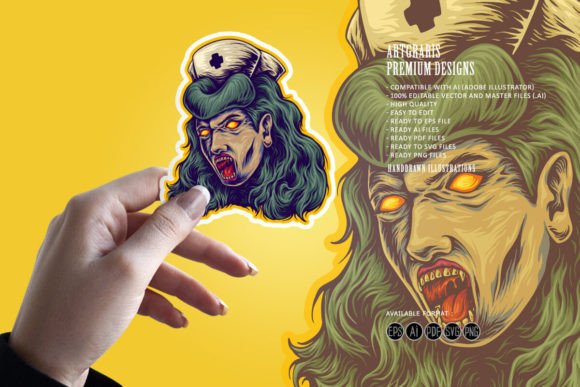
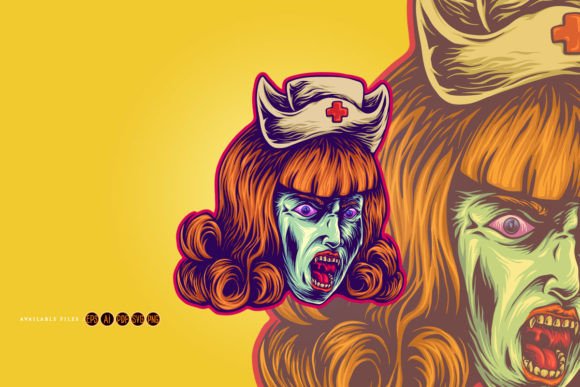
The moment you zoom into the SVG or PNG file, you notice how deliberately uncluttered it is. The nurse silhouette leans slightly forward, arms outstretched—friendly but faintly mischievous. Her ghostly lower half dissolves with soft, tapered edges, not jagged cutouts. That matters. In embroidery, those gentle transitions translate to smooth satin-stitched curves or well-behaved fill-stitch gradients—not frayed corners or thread buildup. No tiny floating details (no detached stethoscopes, no fussy badge text) means fewer risks on small hoop sizes or dense fabrics.
I tested it as a 3.5”-wide chest emblem on a medium-weight cotton blend tote bag—exactly the kind of item my local boutique orders for October pop-ups. On fabric, the design held its shape beautifully: the ghost’s “BOO” is legible at 1.2”, and the nurse’s cap reads cleanly even with standard 40-weight thread. It doesn’t scream “digital clipart.” It looks hand-drawn, then thoughtfully digitized.
Where It Shines—and Where to Pause
Shines on:
- Sweatshirt embroidery: The moderate stitch density keeps it soft and flexible—no crunchy patches on fleece.
- Embroidered patches: Clean outer edges mean clean heat-press or sew-on results; no stray threads catching on velcro or zippers.
- Baby embroidery: Gentle scale and rounded forms work well on onesies or burp cloths—no sharp angles or aggressive contrast that feels “too much” for newborn gifting.
- Holiday gifts & boutique merchandise: It’s seasonal without being cliché—more “vintage apothecary” than “party store.” Customers recognize the humor, not just the holiday.
Use carefully on:
- Thin or stretchy fabrics (like jersey tees): Add lightweight tear-away + cutaway hybrid stabilizer—those smooth ghost curves need support to stay crisp under tension.
- Dark fabric: Test thread colors first. A light gray ghost over navy reads softly; white can glare. Consider tonal thread (e.g., charcoal gray on black) for subtlety.
- Caps or curved surfaces: The design’s width-to-height ratio fits comfortably within standard front-panel cap hoops—but avoid placing it too high on the crown where distortion creeps in.
- Frequent-wash items (kitchen towels, baby blankets): Stick with high-quality polyester thread and lock stitches properly. Avoid ultra-fine satin borders—they’ll fuzz faster.
What It Does for Your Craft Business
For Etsy sellers and small shop owners, Spooky Nurse, Halloween Nurse, Boo Ghost isn’t just another Halloween graphic—it’s a brand-aligned asset. Its tone sits neatly between “handmade charm” and “small-batch professionalism.” When stitched onto an apron for a local bakery’s October special, it didn’t feel like a stock image slapped on—it felt intentional. Customers commented on the “clever twist,” not the “cute ghost.” That distinction builds trust.
It also scales well across product types without losing identity. As a machine embroidery design on a linen pillow cover? Warm and inviting. As a simplified outline in a printable mockup for your digital product listing? Still instantly recognizable. As an applique design layered over flannel? The ghost’s transparency suggestion works beautifully with raw-edge fabric layers.
And yes—it’s versatile enough for commercial embroidery projects, but only if you’ve confirmed licensing terms. Since the listing says “You can print these images as many times as you need,” it implies broad personal and small-business use—but always verify before bundling it into a subscription kit or reselling as part of a digitized collection.
Practical Designer Notes Before You Stitch
Before committing to your first run, do this:
- Test on scrap fabric—same weight and weave as your final product. Watch how the ghost’s taper behaves on textured cotton vs. smooth poly-blend.
- Check thread color contrast in natural light. That “ghostly” effect relies on value, not just hue.
- Review stitch density visually in your embroidery software. If fill areas look overly heavy, reduce density by 5–10% for breathability on apparel.
- Confirm hoop size compatibility. At standard 4×4 or 5×7 dimensions, it fits comfortably—but double-check if you’re using a compact machine or specialty hoop.
- Inspect small details in black-and-white mockups. Will the “BOO” read clearly on a dark mug or a navy sweatshirt?
- Use proper stabilizer—especially for knit fabrics or lightweight linens. A single layer of medium-weight cutaway often outperforms heavier options here.
- Compare light/dark backgrounds in your design preview. This isn’t a high-contrast vector—it thrives on subtlety.
Finally, ask yourself: does this support the story your handmade product tells? Spooky Nurse, Halloween Nurse, Boo Ghost isn’t about shock value. It’s about warmth with wit—perfect for a cozy Halloween sweater, a thoughtful baby shower gift, or a boutique’s curated fall collection. It earns its place not because it’s spooky, but because it’s stitchable, sellable, and quietly memorable.
If you're choosing illustrations for real projects—not just filling a cart—this one earns its spot in your embroidery file library. Just remember: even the friendliest ghost needs the right stabilizer.